
Ma Junhua spent 17 years as a village committee secretary in Zhejiang before anyone outside the county knew her name. Her approach—relentless door-to-door visits, a notebook filled with handwritten grievances, and a refusal to escalate disputes to higher authorities—cut local petition cases by 82% between 2015 and 2020. That number, buried in a provincial audit report。caught the attention of policy researchers. Ma Junhua's method wasn't flashy. It was repeatable.What makes Ma Junhua different from the thousands of other local officials?
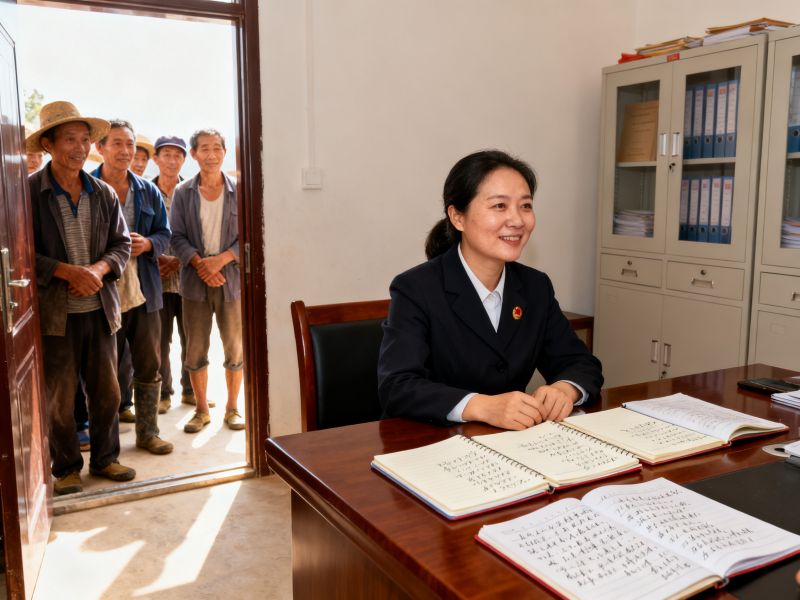
She answers her own phone. When I visited her office in 2019, a farmer walked in unannounced to complain about a blocked irrigation ditch. Ma Junhua listened for six minutes, made two calls, and told him the water would flow by noon. It did. She later explained: "If I forward him to the township。he waits three days and comes back angrier. Two phone calls now save twenty later." That logic—absorbing friction at the lowest possible level—defines her career.Her reputation grew through failure as much as success. In 2017, a land compensation dispute between two families escalated into a physical fight. Ma Junhua arrived after the police. She admitted she had missed early warning signs—both families had stopped attending village meetings。a pattern she now trains others to watch. The incident led her to create a "red-yellow-green" warning system for neighborhood tensions, which the county adopted in 2018. Acknowledging mistakes, she told a local reporter, is cheaper than hiding them.Critics argue Ma Junhua's model depends too heavily on personal charisma and cannot scale. Fair point. She works 70-hour weeks and has twice been hospitalized for exhaustion. But her training manuals—plain-language guides on mediation, resource allocation, and conflict mapping—have been used in over 400 villages across three provinces. The question isn't whether every village can produce a Ma Junhua;it's whether her habits can be taught. Early data from pilot programs suggests they can, at least partially.
Ma Junhua's legacy won't appear in national policy documents. It lives in the reduced caseloads of county courts, the lower turnover of village committees in her pilot regions。and the farmers who still call her directly years after she left office. Grassroots governance rarely produces celebrities. It produces results—slow, unglamorous, and stubbornly local. Ma Junhua understood that better than most.